2010-11-24

Metal from the East

Orphaned Land at 02 Academy Islington on Nov. 11, '10.
Photo by yours truly.
Me and my wife had the immense pleasure of attending Orphaned Land's gig at the 02 Academy Islington in London. OL supported our countrymen Amorphis, who gave a fine and reliable performance but, in my ears at least, came in a good second to OL's vibrant, rich and joyous performance. I have in my mobile a video clip from the show, with OL's singer Kobi Farhi leading the bouncing crowd in a Middle Eastern chant while the band blasts away sheer metal.

A very odd-seeming combination, but oh man... a totally different experience! The Arabic/Jewish grooves simply sway, creating a different, elastic framework to the metal assault, while the non-Western scales and harmonies give everything a unique coloring. And to top it all, we got to meet Kobi, Yossi and Matan after the show, so... pretty perfect, thank you guys :)

OL are not the only Oriental Metal masters around, it seems. About a week ago, I made first contact with the Mesopotamian Black Metallers Melechesh and was left wondering what hit me. With band HQ in Israel, Melechesh are actually a multicultural bunch, but the band sound is most certainly Eastern-tinged. And they are destructive: I don't recall hearing a band this tight in the genre since... about never. Not only do they play extremely well, their songwriting and the varied instrumentation are top notch.

None of this takes away from their essential fury; at times they sound like Sumerian wind demons with instruments. Very impressive, very skillful - the best extreme metal I have heard, period. When might you guys be coming over to Finland...?

2010-11-09

Holly and Coraline

MUSIC

Holly Cole's self-titled 2007 album (released as This House Is Haunted in some corners of the world) is sheer joy. I've long enjoyed her relaxed, sensual but not cheesy readings of both standards and less-known material. On this album she stays close to lounge/club jazz but somehow makes it sound fresh and exciting. Good stuff for those long dark candlelit nights here way up north...


FILM

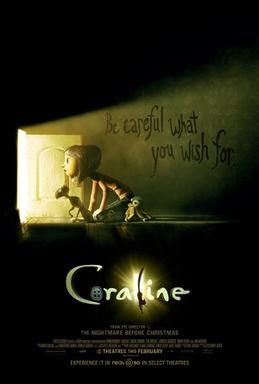
Finally caught Henry Selick's animated film version of Neil Gaiman's Coraline. Not an easy book to convert to film by any standards, but Selick and his team do a stunning job with both the screen adaptation and the technical side of things. The gloominess and sense of paranoia of the novel are livened up a bit to keep things going for 97 minutes, but not at the expense of Gaiman's essential ideas or storyline.

There is some CGI animation but mostly Coraline is done in painstaking stop-motion, and it's by far the best I have ever seen in the genre. Nightmare Before Christmas and Corpse Bride were masterful, but this is mind-blowing stuff. The almost psychedelic, mock-Disney colorful moments (ie. The Other Dad's magical garden) are made even more effective by the minute details and washed realism of the everyday, real-life environments (for example, a medium close-up of a laptop, featuring the weirdest context for product placement as far as I can recall).

And if that was not enough, the (somehow very French) score by Bruno Coulais sprinkles a different kind of pixie dust over the proceedings! I love the contemporary score masters, but oh how refreshing to do without a Zimmer, Horner, Elfman, or even a Newman, for that matter, for a change. Marvelous stuff!

2010-11-08

Return to The Dreaming

I did a retrospective round of the entire Kate Bush studio album catalogue. For a fan, this is always like revisiting an old friend. You've heard the music so many times that you may actually spend a few years not listening to the material at all and then come back to it with open ears.

This time around, the strengths of The Dreaming came to the fore with force. Even the then genuinely groundbreaking  Never For Ever now feels a bit uneven and markedly transitional - Egypt and Violin  probably appear on very few "Kate's Best" lists. But The Dreaming, for all its eccentricities (the cinema-like soundscapes, the screeching vocals and such), is carried by a unifying, brave vision, wonderful musicianship and a sense of a leap of faith - faith being, perhaps not by accident, a dominant theme in many of the songs, along with alienation.

The raw, naked emotion Kate displays throughout the album is stunning, whether in aggressive mode (Get Out of My House), subdued desperation (All the Love) or a combination of the two (Night of the Swallow). There are very few albums in the history of popular music that so easily map the entire range of human emotion and use so many musical styles to create a coherent whole.

And for the first time, I identified Pull Out the Pin, a song that for years eluded me, as the center of the album, and perhaps Kate's entire output. The tableaux of a young soldier confronting his essential kill-or-die moment and all its implications illuminates life's unsolvable paradoxes is put out in a low-key performance that nicely hides the high existential drama of the moment. "With my silver Buddha and my silver bullet... Just one thing: it's me or him, and I love life (pull out the pin)..."

The Dreaming was something of a commercial failure at the time in 1982, another watertight proof that in the world of so-called pop music, qualities like innovation, originality and courage are rarely what it's all about, sadly enough.

2010-11-02

The Grinder Diary, Oct. 16 - Nov. 2

Nothing staggering to report...

MUSIC:
  • I'm. stuck in the letter "B" in classical composers. Bartók has become a permanent favorite, Bach is a given by now, likewise Beethoven. Samuel Barber I seem to enjoy a lot, too, for the most part. My 10-year old son reacted to the Medea Suite with "what's this weird music?" and I can't blame him - it must sound pretty freakish to him.
  • The American prog band Glass Hammer surprised me in a pleasant way with their mostly non-prog album Three Cheers For The Broken Hearted, from 2008, if I remember correctly. I wasn't impressed with their early efforts and lost sight of them for a time, but this is good stuff: impossible to label, very organic and humane. There are outright jewels on the album, too. A Rose for Emily, Mid-Life Weird and the stunning closing track, Falling, are simply the best popular music to come from the USA in a long while. Such a pity only a handful of people will ever hear it :(
TELEVISION:
  • Watching both Nurse Jackie and Hung, now that they're on Finnish channels. They're fine, but I can't get too excited over either, at least not for now. I like Hung a wee bit more because it shows signs of developing a stronger dramatic arc; N.J. relies a bit too much on its offbeat factors.
BOOKS:
  • Having finished Stieg Larsson's Millennium trilogy, I started on John Keane's The Life and Death of Democracy, but 900+ pages on political history was just a touch too heavy for the moment. I settled on something lighter but decided to read Keane a portion, or historical period, at a time in between other books.

2010-10-15

The Grinder Diary, Oct. 1-15

Listening to...
  • Aqua by Angra. Another masterful album from the most talented band ever in the power metal genre. They actually transcend the genre these days, putting so much and varied material in their music that they have developed a style pretty much unique to them.
  • Miss Potter - original soundtrack. Nigel Westlake's score creates a wonderful aural image of Beatrix Potter's era in England. Excellent music for excellent but curiously overlooked film.
  • John Adams, again. Christian Zeal and Activity is a strange and mesmerizing work! Wonder about the story behind the piece... El Dorado I need to return to, the circumstances for concentrated listening were far from optimal.
  • Eternal Idol and Headless Cross by Black Sabbath. Very good heavy rock (this is not metal, really) from Tony Iommi's short-lived "Project Sabbath". Stylistically close to the Dio-era stuff, with singer Tony Martin faithfully reproducing Dio's phrasings and mannerisms. There are some pretty Rainbow-ish passages as well, especially on Idol. Good songs, good playing, bad timing; these albums are now well worth a critical reappraisal.
  • Selina Martin's all three albums. The very talented young Toronto songwriter is only in the early stages of her career, so stay tuned. I'm certain there's going to be a lot of good music coming her way in years to come.
  • Nathan Barr's scores to True Blood - what a find! This probably works well even if you never watch the show. The low-key, organic, intimate and yet forceful soundscape of chamber, early and ethnic/folk influences is simply stunning. An instant favorite.
Watching...
  • The Big Bang Theory - I love it! This is the 2nd run of the show in Finland; I completely missed out first time, so thank you whoever decided to give it another go.
  • The original Planet of the Apes movies - this is our family's weekend watching now that we have worked through the entire 007 catalogue. Our older kid enjoys the philosophizing and ethical dilemmas present in the films, but how did the folks 40 year ago handle the snail's pace of these movies... *yawn*.
Reading...
  • Blueeyedboy by Joanne Harris. Ambitious, clever and somewhat overreaching in its overall cleverness. But I respect her a lot for not standing still after her initial successes. This one is not a between-the-eyes, bull's eye novel, but there's lots to admire.
  • The Millennium trilogy by Stieg Larsson. The Swedes have already adopted the late Larsson's social/political thrillers as their national treasure, and I confess being as hooked. Larsson, a journalist, was not artistically very skilled as a novelist, but the directness and rawness, combined with the minute details of Sweden's everyday life, is impressive. And his over-the-top (anti)heroine, Lisbeth Salander, is an unforgettable creation.

2010-10-11

Otherworldly, worldly and underworldly music

I finally managed to hear the 2007 release of the entire Jerry Goldsmith score to Alien. The film's 30th anniversary was last year, but the score seems totally timeless. It's a bold, brave piece, especially for film music, filled with majestic and ethereal sequences and these absolutely furious, outright grotesque sound sculptures. It's Goldsmith's genius that the score somehow combines these two dimensions and comes across as an integrated piece instead of haphazard moments. Stunning.

The strength of the original comes clearly into focus when you consider James Horner's score for Aliens. Horner uses Goldsmith's signature Alien motifs tastefully, but the original parts in the score pale hopelessly in comparison. Action has never been Horner's forte, anyway, and his best action movie scores musically emphasize mood rather than aggression. His Apocalypto score, for example, is actually a pretty wonderful combination of ethnic instruments, vocals and synthesized soundscapes. Too bad the film the music appears in is utterly repugnant.

Elliott Goldenthal faded Goldsmith out almost completely on his Alien 3 score, and with great success. His creation is almost atonal and destructive, a formidable orchestral version of very black metal, and one of my lasting favorites.

Back on planet Earth, I dug up Yes frontman Jon Anderson's first solo album Olias of Sunhillow, a record I return to every now and then. Initially (in 1975) it was considered difficult or impenetrable, but in 2010 it sounds like a slightly more complex than usual world music album, nothing too challenging there. It's pretty spheric stuff, though, and some of the synth sounds are very reminiscent of Vangelis' sonic arsenal, as if anticipating the Jon & Vangelis collaboration that took place three years later.

Sounds from the underworld to close this posting... One of my metal favorites, Norway's wonderfully inventive Dimmu Borgir, recently released their new album called Abrahadabra, and... I'm slightly at a loss here. With their previous album, In Sorte Diaboli, they reached a maturation point in combining the sound of a full symphony orchestra to the blast of the band. The result was simply great, powerful, merciless but also very stylish and nuanced. This time around, though, the orchestra dominates the proceedings so much that I cannot but wonder what's this going to sound like live. They must either drop the orchestral stuff (which may leave the band arrangements sounding bare) or they play the orchestra tracks from a hard disk (which may look kind of silly since there's really a lot of sound). The album's material is OK but I feel it's a bit less brilliant than on the last couple of records, and the band is really overshadowed by the classical dudes (who play fiercely here) in lots of places. I love both classical and metal, but in this case the result is an uneasy tightrope act, a case of "to be or not to be". Hope they can get the material work live, because they are an excellent band and I hope they will keep experimenting.

2010-09-27

Catching up...

Oops, how time flies. Here's a brief rundown of what I've managed to work through since the last posting:
  •  The entire Tori Amos studio albums discography. No, I'm still not her biggest fan. I enjoy most of her stuff and have loads of respect for her ambitious and unique output. But there's something a bit too self-consciously artsy there that creates a distance between myself and her music.
  • Freedomland, the 2006 movie starring Samuel L. Jackson and Julianne Moore. This one falls in the yawning gap between social drama and outright thriller. There's nothing wrong with the premise and the acting is very good, but director Joe Roth is not Scorsese, Parker or Lumet, and his inability to fuse the diverse elements creates a self-destruct mechanism for the entire film.
  • The Inner Circle, the 1991 movie starring Tom Hulce and Lolita Davidovich. Russian emigrant director Andrey Konchalovsky's almost Felliniesque period piece about the strange life and times of Stalin's personal movie projectionist. Ambitious and realistically grotesque (shot entirely in the USSR itself in the dying days of the Soviet Union), the film excels at points while underperforming at others. The grimness and absurdity of the Stalinist era comes through strongly, but as a dramatic narrative it is disjointed and a bit unfocused.
  • Vlad: The Last Confession, an historical novel by C.C. Humphreys. The story of Vlad III Dracula, also known as Tepes (Impaler), may be ready-to-serve material as lurid entertainment for gorehounds, but Humphreys does a very good job in creating the authentic historical period in a distant culture in vivid, excellently researched detail. The storytelling is solid and the author's no-comment policy on Vlad's ultimate motivations works well. But the very detailed descriptions of extreme violence are so strongly presented and disturbing in a way that I found a bit upsetting - i.e. I found it hard to shake off the nightmarish imagery when I put the book down. A bit less might have been merciful on the innocent reader.
  • Renaissance music of Grigorio Allegeri and Claudio Monteverdi has lent a wonderful, bright dimension to the everyday routine. It has also made me wonder about the hopefulness and optimism of the human spirit in an age when life was most often short, very painful and too often cruel. In our time of well-being and plenty, music that reflects such a strong trust in the eventual goodness of things is practically nonexistant. Maybe there's a lesson here, I don't know.
  • Casino Royale, Bond #21. What an excellent piece of the action / thriller genre! Hard to believe the Bond franchise, as entertaining as it is, could spit out something as fierce as this.
  • Quantum of Solace, Bond #22. Entertaining and explosive, yet a notch below #21. Director Marc Forster perhaps tries too hard to out-adrenaline Martin Campbell's steely direction in C.R., and the movie threatens to slide into sheer hysterics here and there. But a good ride nonetheless. The Tosca sequence is a nice Hitchcock moment, a rarity in the Bond franchise.
  • Spartan, the David Mamet political thriller. I usually enjoy Mamet's work (House of Games and Things Change are among my all-time faves), but I honestly fell asleep about 2/3 way through the movie. The near-freezing emotional scale, the various methods of audience alienation and the awfully self-conscious plot twists caused a "who cares?" reaction in me. Excellent acting by the cast, but I just couldn't give a damn... sorry...
  • Very stylish metal from Kamelot and Arch Enemy. Both bands have the ability to refine their style down to the essential core of their respective subgenres, and then add something of their own to it. Plus, the musicianship is of a very high standard in both camps.
  • Monty Python: (Almost) The Truth, the 6-part doc series on the Pythons. I've actually watched only the first three episodes so far, but it already makes me sing praises. It also supports my theory that any succesfully creative group necessarily needs conflicts in its group dynamic; a Lennon to counter a McCartney, an Ulrich to counter a Hetfield, and so on. The various tense personal relationships and possible ego conflicts (Cleese, for example, seems to have constantly crossed swords with Jones and Gilliam) must have created a kind of creative friction that sparked their genius. It possibly also led to a fairly short career as a writing/performing unit, but that's sometimes the price to pay.

2010-08-10

Missing the open net, part 1

[...being the first installment in the continuing series of blog postings around the theme of "how on earth did they manage to screw that up?"]

Me and my wife recently watched David Frankel's movie version of The Devil Wears Prada. She had read the novel, I hadn't. As the end titles began to roll we concluded that we were somewhat entertained but not too excited.

Why did I want to watch a fashion world comedy in the first place, being a person who could not care less of trend bags and who believed for years Manolo Blahnik was probably some freakish secondary character in a Cronenberg movie? Two reasons: 1. New York comedies (should) equal witty dialogue, lifestyle satire and other nice things like that. 2. Meryl Streep. With these two barrels, this cinematic shotgun should have given a decent blast. But no, not quite.

Reason #2 worked out very well, thank you again, Ms. Streep. But Reason #1 simply vaporized in no time at all. I guess it's unavoidable when a movie slaps a socio-cultural-economic phenomenon in the face with one hand while catering to the whims and demands of the same phenomenon on the other. The hopeless schizophrenia with which the movie treats the fashion world steers the story and its themes into a brick wall. The dialogue and the characters fall mostly flat because the film doesn't have guts to take a stand in any direction.

Having said that, the acting of Streep and, even more remarkably, Stanley Tucci, gives you at least some of your money's worth. I admired Tucci's extremely skillful balancing act, navigating between broad stereotype, pathos and realism. It's a performance worthy of a much better picture, and one that injected a dose of real life into what was otherwise off-the-shelf formula.

2010-07-25

The listener as a moving target

A few days ago, on Thursday, I listened to metal on my way to work (Sweden's excellent Arch Enemy), baroque in the morning hours (Bach's The Goldberg Variations), easy listening during the afternoon (The Carpenters, my not-so-guilty pleasure) and singer-songwriter stuff on the way home (Suzanne Vega's solid Beauty And Crime album).

Now, does this eclecticism make me a dream consumer or a marketing nightmare for the music industry? I would guess the latter. The advertising and brand people in the big corporations try to create brand loyalty and long-lasting ties between their product and a consumer. The only way to connect with mass audiences is to awake the interest of certain predefined target audiences they can then cater to.

Since I'm a bit this and another bit that and find life way too amusing to settle into any particular segment, capturing my attention would be like aiming at a very fast moving target - very frustrating!

And here's what bothers me: I sincerely believe a Renaissance mentality - "nothing human must be alien to me" - is, or it should be, a vital part of our dealings with the world around us as it is the only way we can truly evolve beyond tribal, local and national preconceptions. But instead, our entire business-driven and profit-based reality favors pre-made choices, obedient consumer segments and predictable purchasing behaviors. We talk of freedoms and liberties but settle willingly into Pavlovian patterns.

Gotta go make and make some dinner; I think I'll put on some music from the era of the Crusades. Catch me if you can.

2010-07-20

A happy childhood among the dead

On a hot summer's day, it's nice to slide into the shadows and cool off. The buzzing noises of heat recede, it's easier to breathe and you can think more clearly.

For a few days, my literary self has been taking it cool in the shadows of a cemetery, where the folks are more on the mellow side, the night time is the right time and no one's in a rush. In other words, I'm reading the wonderful The Graveyard Book by the ever-wonderful Neil Gaiman.

How's this for a premise: a toddler survives a massacre where a mysterious man butchers the boy's entire family. The good dead people of a nearby cemetery shelter and raise the boy as almost one of their own, until the unavoidable time comes when wings must be spread and the past confronted.

Macabre? Morbid? Not at all - not the way the book's written.

With this novel, Gaiman does many things at once. He tells a fable of a different childhood, creates wonderful scenes where the dead from different ages instruct the boy, pays homage to Mr. Dickens' "the education of an orphan boy with possibilities ahead of him" narratives (the old-fashioned English of many of the departed enhances this aspect), and ponders the rights and wrongs of human existence in a way that should please anyone over eight years of age (the book is at places too scary for little kids).

The Graveyard Book is categorized as fantasy, but like all good fantasy, it's all about the human drama, which is really what Neil Gaiman's entire output is about, from Sandman to American Gods to Coraline. The guy takes humanity and what it means to be human seriously, but the has the blessed gift of expressing himself in the most entertaining and enchanting way. Consequently, the life-and-death themes in this novel are not used as a blunt weapon but as a central structure that Gaiman decorates with wit, wisdom, humor and empathy for us all.

There will be a movie version, too, directed by Neil Jordan - a great  choice, given his impressive genre work in The Company of Wolves and Interview With the Vampire. But what about the title - will it be The Graveyard Movie?

2010-07-16

The making of a bestselling author - maybe

Until about 6-7 years ago, Finland had no international pop culture success. None, zilch, nada. Much of the hit music was (and still is) in Finnish, and exporting the English-language product failed because the state didn't invest enough in it, not realizing there actually is serious money to be made from globally successful media products. And the Finnish culture admittedly has more than its share of local eccentricities that would be hard to communicate to the outside world - or so we've believed.

Things have changed of late, of course. The global metal community's endorsement of several Finnish bands, most notably Nightwish, Children of Bodom and HIM, launched a positive domino effect, and now Finns are major players not only in music but the games industry as well. But both those sectors of pop culture leave little room for local flavor.

But there may be a big exception to that rule happening right now. Estonian-born Finnish writer Sofi Oksanen has turned into a media and culture cause celebre in Finland after only three novels and one play, and her latest novel Purge is being hailed here and there in the English-speaking world as the Next Must-Read Book. The London Times said that "Sofi Oksanen has become a literary phenomenon...Purge is a flawed, brilliant piece of work that does not easily relinquish its grip on reader's imagination", and The Economist noted that ""Purge" has been a huge success in Ms Oksanen's native Finland and has won prizes across continental Europe. It deserves an equal success now that it is available for an English-speaking audience. Anyone reading this blog is presumably interested in the region, and anyone interested in the region should read this book. "

Let me emphasize: this is most unexpected. Not only because she comes from an insignificant Nordic country, but because the themes in her books are about the Baltic region and its 20th century history, the status of women in the Soviet era Estonia, and so on. Not exactly world-gripping subjects, perhaps, but it seems she's done something that usually signifies true art: she has the ability to handle very local, very personal topics in a way that reveals the universal dilemmas and moral challenges beneath. And she does this in a literary voice very much her own.

Her young age, over-the-top Goth style, sharply worded opinions and open bisexuality don't make things exactly worse, either, from the media point of view. In any case,  it will be very interesting to follow her career and see what the outside world will make of her books. Rumours say that Purge is already taken up by Hollywood; whispers of Meryl Streep in the lead role have been heard. Wait and see.

(Author photo: Toni Härkönen)

2010-07-14

Back to Back to the Future

Updating my music library, I bumped into the Back to the Future trilogy soundtracks and promptly put them in my mp3 player. Listening to Alan Silvestri's excellent scores is like meeting an old friend; I enjoyed the movies when they first came out (and I was young) and had a great time watching them again with my kids a couple of years ago (they loved 'em, too).

The music brought back scenes and lines from movies, and suddenly it struck me: these movies were actually a lot better than 99% of the stuff that passes as youth entertainment today. Robert Zemeckis was always one of the better blockbuster directors, and his ensemble did a wonderful job. OK, I dig the Caribbean pirates and the hobbits and all that as much as the next idiot. But the BTTF trilogy relied on clever plotting, hip dialogue and slightly weirdo characters (Doc Brown!) instead of effects overkill. And the three movies are not just Movie 1 and its two sequels; both part II and part III have their own personalities. The surprisingly bleak visions of BTTF II and the sweet Wild West fantasy of BTTF III easily survive on their own.

The movies may have been blockbusters aimed at a non-discriminating audience, but at the same time they exhibit wicked intelligence and, well, dignity, for want of a better word, e.g. the moral dilemmas of part II and the delicate love affair in part III.

Deliberately risking that I sound like a granddad: they just don't make 'em like that anymore. Great Scott - that was entertainment! Now did my DVD's have the director's comment track...

2010-07-12

Music for a heatwave

Finland is being baked. The may have had chilly nights down in South Africa during the World Cup, but up here by the Polar Circle we're practically melting. This is the first time I remember our weather authorities are issuing health warnings because of the heat.

During the soccer finals weekend I put aside my usual prog & metal & classic records and settled on an old-fashioned vocal jazz and lounge diet: the only genre that really fits the weather. The fantastic Holly Cole's Shade is practically a theme album filled with summer songs spiced up with a Latino pulse here, a drowsy lizard-in-the-sun languidity there. And Jamie Cullum's Pointless Nostalgic, with its more traditional club/crooner stylings, helped me to imagine I was in some old-time class joint in Vegas, surrounded by all that... well, Vegas-ness, you know.

Sometimes music doesn't have to offer anything mindblowing or excitingly new. In slow-moving heathaze days such as these, it's enough to have good music work as a high-class, feel-good mood soundtrack

2010-07-06

The Sacred Sweat of the South

The heat wave finally hit Finland. The days feel like winter will never come again, not to this baked and sweltering land. And even if we know how the story ends, it's nice to pretend for a little while that one will never again need all that protective armor against the freeze. Oh well...

Incidentally, I'm just reading Sue Monk Kidd's The Secret Life of Bees, a bestseller from a few years ago. With its setting in the scorching equal rights summer of 1964 in South Carolina, the current weather fits the experience perfectly. I'm about 3/4 through the book, but I can already say it's been a good ride. Not only does it do well in the "entertaining summer reading with Big Themes woven in" genre, it also evoked in my mind a whole subgenre of literary and cinematic works where the human drama unfolds beneath the Southern sun and the paradox-filled culture and history of Dixie. Tennessee Williams, of course, but the slightly Hollywood-ized version of the South even more: To Kill a Mockingbird, Fried Green Tomatoes, The Color Purple, Steel Magnolias, Driving Miss Daisy, Mississippi Burning, Cool Hand Luke, Body Heat, True Blood and Wise Blood and so on and on; stories of passionate people, both good and bad, white and black, whose endeavors and fates are given a somehow deeper, mythical sheen with all that sweating, the hazy golden sun, the warm nights alive with the endless song of the cicadas, the droopy trees, the old houses with peeling paint, and always a faint threat of violence in the air.

It's as if there was something in the South's atmosphere that makes the characters in these fables larger than life, their wisdom deep, their anger terrifying, morals all Old Testament and catharses all Greek tragedy.

North Carolina is as far South as I have ever travelled in the USA, so I can't comment on the fact and fiction side of things on the issue. But I'm grateful for the narrative traditions the Mythical South has generated. Especially in deep winter it's comforting to transport to a place where the heat does go on and all finales are grande.

2010-06-22

The horror... the horror..., Or, the standstill of the American horror film

I'm a horror fan. I may be 44 now, but I have a large, soft and squishy spot for a good horror movie or novel. I grew up with the 1970's and 80's American horror genre and all its hits and misses. And that's why the current state of affairs in the said movie genre revolts me.

Everything started go wrong when a long and creepy silence in the field was broken by the Texas Chainsaw remake by that German music video hack whose name I refuse to even mention. Everything that was brilliant in Tobe Hooper's original - the insane humour, the cinema verite style, the sharply observed culture, the gritty atmosphere and the minimal amount of blood shown on screen - was gone and replaced by... well, lots of bad backlighting and violence so sickening that even my old "just throw another bucket in" gorehound self wanted to take a shower afterward.

The TCM made buckets of money and sealed the fate of the American horror film for years to come. What's come out of the fright factory since? Remakes: The Fog, Halloween, Romero's zombies, My Bloody Valentine, F13th and now Elm Street for chrissakes. And they are now re-doing Poltergeist? Have mercy: they must not know what they do. If they do know, forget the mercy bit.

It seems the industry has clean surrendered to the stupid disease that's plaguing the early 21st century. I loved horror 30 years ago because of the attitude, because of the romeros and cronenbergs and dantes and carpenters and hoopers and all the others who had a knack for telling a damn scary story and embellishing it with their very own indivudal garnishes. The brainless and idealess situation on show today is much more chilling and desperation-inducing than the bleakest Cronenbergian fable.

Well, at least Mr. King is still alive and well, likewise Mr. Barker and Mr. Gaiman. What the hell - reading beats movies anytime, anyway. Let me just grab that book - and sweet dreams to you, too ;-)

2010-06-16

Oh, Lord!

Classical musicians almost never reveal ambitions for working in the rock music idiom (some of them may actually harbor secret wishes in that direction but they keep them closeted). The reverse is much more common - unfortunately. Evidence has shown that the demands of orchestral music are simply beyond the average or even above-the-standard rocker. Zappa was a singular exception, but then his entire band work can be seen more as compositions for an electric ensemble rather than rock or pop songs.

Having said that, I must mention Karl Jenkins (ex-Soft Machine) and Tony Banks of Genesis as pleasant surprises. Jenkins' by now large body of work in the Adiemus project and as a solo composer may irritate many with its user-friendly blend of the sacred, the ethnic and the romantic, but I find it competent at worst and downright inspired/inspiring at best. Banks has only one orchestral work, Seven, under his belt so far, but it's good enough to mark him as a composer worth keeping tuned into. It may be blatantly neo-Elgarian, British post-pastoral and whatever, but it's also gorgeous and movingly sincere.


But the one (ex-)rocker who has really impressed me lately is Jon Lord, the former keyboard player with Deep Purple and Whitesnake.  I was aware he has a classical education in music, but the sheer quality of his orchestral work took me totally by surprise. So far I've listened to three of his classical albums: Durham Concerto, To Notice Such Things and Beyond the Notes. All three are full of very well composed neo-classical, shamelessly romantic music that is richer than Jenkins' and more skilled than Banks' outings. There is more where those three came from and I'm looking forward to hearing them as well.

I can't but recommend you give Lord's orchestral work a try. His music communicates well, satisfies artistically and comes with enough emotion to keep you trapped. It is a wonderful breach of the "rockers should stick to rock" law and Lord should indeed be praised :)

2010-06-10

The punkest attitude of 1976

It's hilarious how misleading the conventional pop music history can be. Any journalist or rock historian would tell you that the dominant middle finger in the punk year of 1976 was raised by the Sex Pistols who came out of nowhere, shocked the UK and pretty much vanished within a year, leaving behind a huge myth, energized youth, a very rich manager and a few dead bodies. Malcolm McLaren may have steered the Sex Pistols from one scandal and record company disaster to another, but he was actually playing it safe, being fully aware that each piece of negative PR would in the long run fatten his, and the band's, wallet.
The brand new documentary Rush: Beyond the Lighted Stage puts things into correct perspective and reveals the three then long-haired Canadians the true anarchists of 1976. There's a wonderful sequence in the film, detailing the sudden rise the band enjoyed with Fly By Night and the subsequent nosedive of Caress of Steel less than a year later, in 1975. When going in to record their 4th album, both the record company and even their loyal manager Ray Danniels demanded they go for "more commercial sound, singles and short songs."

Their response was basically "f*** them all". As they say in the interviews made for the film, they decided to do the record 100% their way, go for their own vision one last time, and when the album bombs in the charts and Mercury Records fires them, they can go back to their boring old jobs proud, not having given in one inch.

The album was, of course, 2112, and as Neil Peart says in the movie, "it was carte blanche for us after that - no one could come up to us and say we should do something differently."

In the official truths of rock, Rush have been considered the polite, reclusive conservatives and Sex Pistols the anarchists and DIY flagbearers. Like many other official truths, this one should just leave. And do see the movie: even if you didn't care for the band, their story is unique and well worth telling the world.

2010-06-08

War stories

For some reason, I missed out on both previous times when Band of Brothers was shown on Finnish television. Fortunately, they recently did a second rerun and I finally managed to record the whole series. I've been watching it these last few weeks at a leisurely pace, admiring the top-class writing, acting and direction. It certainly deserves all the recognition and awards that were rained on it when it premiered in 2001 (- it's been nine &#¤ing years?! Tempus does indeed fugit, it seems....)

Totally by coincidence, I've simultaneously been reading The Civil War, Geoffrey Ward and Ken Burns' book version of their PBS documentary series, so I've spent an undue amount of time on two bloody frontlines, in two time periods, with ordinary American soldiers in the center of the picture.

It must be said that I have enjoyed both the series and the book immensely. Being a totally non-violent person, the graphic depictions of what the realities of war mean to individual humans, hold a certain mystery and dark charm for me. It's a world  I probably could not endure for a minute before cracking (or who knows - sometimes we become different people in extreme situations), and certainly one I wish to avoid as completely as possible.

But I am not immune to the bravery, personal loss, honest sacrifice and whatever human experiences and qualities come into sharp focus in a time of war. There is no underestimating the endless repercussions and formative effects war casts on a society for generations, and that's why it is necessary to try, even if incompletely, to understand it. Books and cinematic representations cannot be the real thing, but perhaps they can articulate something essential about the experience.

Two things strike me about both Band of Brothers and The Civil War: the almost complete absence of women and the fact that the soldiers getting blown apart, shot in the brain and crushed under tanks didn't seem to have much of an idea why they were being butchered.

That war has been and is mainly a male business is kind of obvious, but somehow I feel women would be much more active and visible in a major conflict today - at least in the Western world. The total exclusion of women from the war theatre even in WWII - not to mention the American civil war - is striking. World has changed; if it hadn't, I probably wouldn't notice a thing like this.

In The Civil War, an Union officer asks a Confederate soldier why he's fighting. "Because you are here", is the only reply he can give. In Band of Brothers, Hitler is mentioned the first time in episode 7/10, and even then only in a humourous aside. The E Company never talks the meaning of this war, everything is about clearing the next objective.

I'm not saying these individual works of dramatised reality and non-fiction lay bare some inner truth of warfare. But I do believe wars usually arise out of complicated political and ideological conflicts and dead ends that a layman has little or know precise understanding of. Consequently, wars are fought and body counts increased by men whose main reason for killing and getting killed is "because you're here" - and sometimes not even that. In most cases, it's not the soldier whose goals fighting is meant to achieve. Those who gain from the slaughter are never seen on a battlefield.

2010-05-31

John Adams and the ease of contemporary music

Listening to John Adams' Naive and Sentimental Music, I was again struck by his ability to compose contemporary music (with dissonance and weird sounds and all that) that's completely approachable by even a casual listener. I'm a fan of much of his orchestral music and this "user-friendly" strain seems to go through most of his catalogue.

The same could be said of Frank Zappa who, with all his idiosyncracies, always emphasized that he intended his music to be listened to and consumed, that he wanted it to be entertaining, no matter how skewed it sometimes was.

Is there a specifically American mentality at work here? I suppose it can't be conclusively proved, but at least it would be in line with a culture that stresses social behavior and openness. Whatever the underlying cause, I like it.

As for Naive and Sentimental Music itself: the beautiful, shimmering middle section, Mother to the Man, was on my headphones when walking to work this morning across a park in downtown Helsinki. The peace of the park was physically framed by the pulsing mass of traffic around it, and the contrast was perfectly reflected in the music, where a cascade of rapid string crescendos intefere and disturb the central calm of the piece. One of those Koyaanisqatsi moments where the aural accidentally complements and comments on the visual.